Did you mean:
Blighted54 Results for : benighted
-

Phillis Wheatley: The Life and Legacy of the Slave Who Became Colonial America's Most Famous Poet , Hörbuch, Digital, ungekürzt, 69min
The world is a severe schoolmaster, for its frowns are less dangerous than its smiles and flatteries, and it is a difficult task to keep in the path of wisdom. (Phillis Wheatley) Phillis Wheatley has always been a difficult figure for people to wrap their minds around, both during her life and centuries after it. Indeed, she fits no easy stereotypes that historians or contemporaries liked to use to classify their subjects. Her "career" has always escaped definition. In the 18th century, enslaved people were not supposed to have been educated, certainly not to the level that Wheatley was, nor were they supposed to have creative abilities beyond those taught to them by their masters. In a time and place where slaves were rarely taught to read, they were obviously not expected to write better poetry than the vast majority of their peers. But if Wheatley refused to be placed in a box and labeled during her life, that has been even more the case after her death. Given that she was a child who was transported from Africa and raised in slavery, her poetry contains none of the sorrow or angst that modern readers would anticipate seeing. In fact, in one of her most controversial works, "On being brought from Africa to America", she wrote: "Twas mercy brought me from my Pagan land, Taught my benighted soul to understand That there's a God, that there's a Saviour too: Once I redemption neither sought nor knew. Some view our sable race with scornful eye, 'Their colour is a diabolic dye.' Remember, Christians, Negroes, black as Cain, May be refin'd, and join th' angelic train." This can seem disconcerting, but it is also in keeping with other Christian literature through the ages in that it points to something terrible being used by God to bring about conversion and salvation. In that sense, it is not so much a defense of slavery, as some would interpret it, as it is a glorification of grace that could overcome tragedy. Her ungekürzt. Language: English. Narrator: Scott Clem. Audio sample: https://samples.audible.de/bk/acx0/096426/bk_acx0_096426_sample.mp3. Digital audiobook in aax.- Shop: Audible
- Price: 9.95 EUR excl. shipping
-

The Great War and the Golden Age of Hollywood Horror (eBook, ePUB)
NOMINATED FOR A RONDO HATTON AWARD IN CATEGORY #11 - BOOK OF THE YEAR (NON-FICTION). "One of the best Horror Film books of all time" - BookAuthority Every fan of the Universal Horror films of the 1930s knows that James Whale directed four of the best of those films: Frankenstein (1931), The Old Dark House (1932), The Invisible Man (1933), and Bride of Frankenstein (1935). But do they know he served as a Second Lieutenant in the British Army on the Western Front in the First World War, going to France in July 1916 and serving in the trenches? Do they know the details of his service? Do they know he was captured by the Germans in August 1917 and spent some 16 months in a German P.O.W. camp? Do they know he participated with the prisoners' theatrical troupe while in the camp, and this led to his career on the stage? Do they know the details of how his first big break as a theater director came when he helmed Journey's End, first in London and then on Broadway, a war play written by R.C. Sherriff, who had also served as a British officer on the Western Front? The details of how his first break as a credited film director came with the movie version of Journey's End? That The Old Dark House is based upon Benighted, a novel by J.B. Priestley, who also served in the British Army on the Western Front, and that Great War themes figure prominently in both the novel and the film? Do they know about the influences of Great War themes in James Whale's films? In The Great War and the Golden Age of Hollywood Horror, the reader will explore all these things, in detail, and will also read about other participants in the Universal Horrors who were involved in the War, and how the War influenced other aspects of those Universal films as well-down to the village sets used in nearly every Universal horror movie from Frankenstein through the 1940s. Little, if any, in-depth coverage of these topics exists. This book will take the reader over new ground, while revisiting old subjects with a new twist. The decade of the 1930s is generally regarded as the "Golden Age" of the American horror film, with Universal as the studio which set the trend. Indeed, the term "horror film" arose when, following the success of Dracula (1930), Universal declared its intention to make "another horror film." That "other" horror film was, of course, Frankenstein (1931). The decade would see a string of horror films from Universal, including Murders in the Rue Morgue (1931), The Old Dark House (1932), The Mummy (1932), The Invisible Man (1933), The Black Cat (1934), Bride of Frankenstein (1935), Werewolf of London (1935), The Raven (1935), The Invisible Ray (1935), Dracula's Daughter (1936), and Son of Frankenstein (1938). James Whale directed four of these films: Frankenstein, The Old Dark House, The Invisible Man, and Bride of Frankenstein, which are generally regarded by critics and fans alike as among the very best of these Golden Age Horrors. Whale, and other creative talents involved in these films, served with the British Army on the Western Front and saw combat in the First World War. The War influenced other Universal Horrors, as well. This book details the War experiences of these individuals, and explores how those experiences, as well as the War itself, helped to shape Universal's Golden Age Horrors.- Shop: buecher
- Price: 9.49 EUR excl. shipping
-
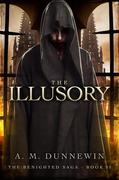
The Illusory (The Benighted Saga #2)
The Illusory (The Benighted Saga #2): ab 4.49 €- Shop: ebook.de
- Price: 4.49 EUR excl. shipping
-
Obscene Repressed
Benighted hat mit "Obscene Repressed" ein gewaltiges Death Metal Monster geschaffen, das nur wenig Zeit zum Verschnaufen bietet.- Shop: odax
- Price: 16.02 EUR excl. shipping
