48 Results for : lagging
-

The Automotive Manifesto: How Brand Connection Can Save Retail Automotive , Hörbuch, Digital, ungekürzt, 43min
If you’re a dealership (or any retail business, really) whose marketing relies on paid search and sell, sell, sell commercials to keep your business flourishing, you’re wrong. Connection is the new currency. Marketing, sales, and branding (yes - branding!) must radically shift to reflect how people actually engage with companies. It would be an understatement to say the auto industry has been slow to adapt. Make no mistake, change - spurred by the Amazons, Carvanas, and CarMaxes of the world - is upon us. If you’re not willing to be among the most innovative thinkers regarding brand connection, you’re simply not going to survive, let alone thrive. The Automotive Manifesto goes beyond conventional marketing, sales, and branding. It contains actionable tips and the thought processes behind them. Automotive retail needs a reminder that it didn’t conquer all of the challenges over the last hundred years to get beat by ones, zeros, and a smartphone. It cuts right through the brand rot that’s infesting automotive retail and offers real-time strategies to out-thrive the lagging 90% of dealers who can’t change with the times. By listening to this book, you will learn: How brand connection can transform both your internal and external experience Ways to rid your business the exhausting churn of 30 day sales cycles and tactics Powerful alternatives to common sales, fixed ops, and people strategies Branding insights, retail strategies, and business tips that get real, lasting results A new model of marketing focused around connection to your consumers An approach for the 10% of dealers who are focused on growth to take advantage of an unprecedented opportunity for brand expansion Paul J. Daly refines almost two decades of business leadership, retail auto, and brand marketing experience into the Manifesto, a no-nonsense guide to the connection that is actually ungekürzt. Language: English. Narrator: Paul J Daly. Audio sample: https://samples.audible.de/bk/acx0/159445/bk_acx0_159445_sample.mp3. Digital audiobook in aax.- Shop: Audible
- Price: 9.95 EUR excl. shipping
-

The Surveyor Program: The History and Legacy of NASA’s First Successful Moon Landing Missions , Hörbuch, Digital, ungekürzt, 127min
Today the Space Race is widely viewed poignantly and fondly as a race to the Moon that culminated with Apollo 11 “winning” the Race for the United States. In fact, it encompassed a much broader range of competition between the Soviet Union and the United States that affected everything from military technology to successfully launching satellites that could land on Mars or orbit other planets in the Solar System. Moreover, the notion that America “won” the Space Race at the end of the 1960s overlooks just how competitive the Space Race actually was in launching people into orbit, as well as the major contributions the Space Race influenced in leading to today’s International Space Station and continued space exploration. The Apollo space program is the most famous and celebrated in American history, but the first successful landing of men on the Moon during Apollo 11 had complicated roots dating back over a decade, and it also involved one of NASA’s most infamous tragedies. Landing on the Moon presented an ideal goal all on its own, but the government’s urgency in designing the Apollo program was actually brought about by the Soviet Union, which spent much of the 1950s leaving the United States in its dust (and rocket fuel). In 1957, at a time when people were concerned about communism and nuclear war, many Americans were dismayed by news that the Soviet Union was successfully launching satellites into orbit. Among those concerned was President Dwight D. Eisenhower, whose space program was clearly lagging a few years behind the Soviets’ space program. From 1959-1963, the United States worked toward putting satellites and humans into orbit via the Mercury program, but Eisenhower’s administration was already designing plans for the Apollo program by 1960, a year before the first Russian orbited the Earth and two years before John Glenn became the first American to orbit the Earth. On May 25, 1961, President John F. Kennedy addressed Congress an ungekürzt. Language: English. Narrator: Daniel Houle. Audio sample: https://samples.audible.de/bk/acx0/194423/bk_acx0_194423_sample.mp3. Digital audiobook in aax.- Shop: Audible
- Price: 9.95 EUR excl. shipping
-

The Ranger Program: The History and Legacy of NASA’s Initial Attempts to Land a Spacecraft on the Moon , Hörbuch, Digital, ungekürzt, 126min
Today, the Space Race is widely viewed poignantly and fondly as a race to the Moon that culminated with Apollo 11 “winning” the race for the United States. In fact, it encompassed a much broader range of competition between the Soviet Union and the United States that affected everything from military technology to successfully launching satellites that could land on Mars or orbit other planets in the Solar System.Moreover, the notion that America “won” the Space Race at the end of the 1960s overlooks just how competitive the Space Race actually was in launching people into orbit, as well as the major contributions the Space Race influenced in leading to today’s International Space Station and continued space exploration.The Apollo space program is the most famous and celebrated in American history, but the first successful landing of men on the Moon during Apollo 11 had complicated roots dating back over a decade, and it also involved one of NASA’s most infamous tragedies.Landing on the Moon presented an ideal goal all on its own, but the government’s urgency in designing the Apollo program was actually brought about by the Soviet Union, which spent much of the 1950s leaving the United States in its dust (and rocket fuel). In 1957, at a time when people were concerned about communism and nuclear war, many Americans were dismayed by news that the Soviet Union was successfully launching satellites into orbit.Among those concerned was President Dwight D. Eisenhower, whose space program was clearly lagging a few years behind the Soviets’ space program. From 1959 to 1963, the United States worked toward putting satellites and humans into orbit via the Mercury program, but Eisenhower’s administration was already designing plans for the Apollo program by 1960, a year before the first Russian orbited the Earth and two years before John Glenn became the first American to orbit the Earth.On May 25, 1961, President John F. Kennedy addresse ungekürzt. Language: English. Narrator: Daniel Houle. Audio sample: https://samples.audible.de/bk/acx0/211685/bk_acx0_211685_sample.mp3. Digital audiobook in aax.- Shop: Audible
- Price: 9.95 EUR excl. shipping
-

Better You Boxset: Summaries: 4 Books in 1! (Vol. 4): Summary: Grit + Summary: The Seven Habits of Highly Effective People + Summary: Smarter Faster Better + Summary: Thinking Fast and Slow , Hörbuch, Digital, ungekürzt, 217min
If you’re looking for ways to fully maximize your potential, then listen to this collection of audiobooks. It presents the key wisdom from four of the best personal development guides out there. Do you want to learn better strategies that will lead you to incredible achievements in any area of your life? Or perhaps your productivity is lagging and you want to find ways to boost it. Maybe you agonize when it comes to making big decisions or you react intuitively and later regret it. Or are you looking to be more effective in all parts of your life? If you feel yourself nodding to any of these statements and questions, then this bundle will provide you with the actionable content for which you’ve been searching. It will provide you with significant insights to help you on your journey to becoming a more effective person. It will also give you a better understanding of what makes people tick and what motivates us. Better You Box Set: Summaries is a collection of four summaries from some of the most insightful and powerful personal development guides ever published: Grit, by Angela Duckworth; Smarter Faster Better, by Charles Duhigg; Thinking, Fast and Slow, by Daniel Kahneman; and 7 Habits of Highly Effective People, by Stephen R Covey. It cuts through all the extra bits and gets straight to the point, delivering you the most important parts of these four outstanding books. In this audiobook bundle, you will discover:The nuggets of wisdom from these renowned authors - without the fluff.The true qualities of outstanding performance and how you can adopt them.The secrets of being productive, based on the latest knowledge in neuroscience, psychology, and behavioral economics.How highly effective people are the way they are - and how you can be, too.How to tell the difference between fast, intuitive thinking and slow, rational thinking - and how this ca ungekürzt. Language: English. Narrator: David Margittai. Audio sample: https://samples.audible.de/bk/acx0/141161/bk_acx0_141161_sample.mp3. Digital audiobook in aax.- Shop: Audible
- Price: 9.95 EUR excl. shipping
-

Semi-State Actors in Cybersecurity (eBook, ePUB)
The universe of actors involved in international cybersecurity includes both state actors and semi- and non-state actors, including technology companies, state-sponsored hackers, and cybercriminals. Among these are semi-state actors--actors in a close relationship with one state who sometimes advance this state's interests, but are not organizationally integrated into state functions. In Semi-State Actors in Cybersecurity, Florian J. Egloff argues that political relations in cyberspace fundamentally involve concurrent collaboration and competition between states and semi-state actors. To understand the complex interplay of cooperation and competition and the power relations that exist between these actors in international relations, Egloff looks to a historical analogy: that of mercantile companies, privateers, and pirates. Pirates, privateers, and mercantile companies were integral to maritime security between the 16th and 19th centuries. In fact, privateers and mercantile companies, like today's tech companies and private cyber contractors, had a particular relationship to the state in that they conducted state-sanctioned private attacks against foreign vessels. Pirates, like independent hackers, were sometimes useful allies, and other times enemies. These actors traded, explored, plundered, and controlled sea-lanes and territories across the world's oceans--with state navies lagging behind, often burdened by hierarchy. ** Today, as cyberspace is woven into the fabric of all aspects of society, the provision and undermining of security in digital spaces has become a new arena for digital pirates, privateers, and mercantile companies. In making the analogy to piracy and privateering, Egloff provides a new understanding of how attackers and defenders use their proximity to the state politically and offers lessons for understanding how actors exercise power in cyberspace. Drawing on historical archival sources, Egloff identifies the parallels between today's cyber in-security and the historical quest for gold and glory on the high seas. The book explains what the presence of semi-state actors means for national and international security, and how semi-state actors are historically and contemporarily linked to understandings of statehood, sovereignty, and the legitimacy of the state.- Shop: buecher
- Price: 16.95 EUR excl. shipping
-
-
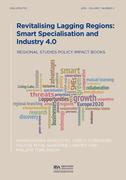
Revitalising Lagging Regions
Revitalising Lagging Regions - Smart Specialisation and Industry 4. 0: ab 36.99 €- Shop: ebook.de
- Price: 36.99 EUR excl. shipping
-
Very Best of Billie Holiday (Centenary Album)
"a singular and unrepeatable talent, whose finest hours are remarkably revealing and often surprisingly joyful ... One of her innovations was to suggest a role for the singer which blended in with the musicians ... While the most obvious characteristic of her singing is the lagging behind the beat, she seldom sounds tired or slow to respond ... her best singing invests the words with shades of meaning that vocalists until that point had barely looked at" (Penguin Guide to Jazz)- Shop: odax
- Price: 8.47 EUR excl. shipping
