47 Results for : contractions
-

Reiki for Beginners: The Complete Guide to Learning the Power of Reiki Self-Healing, Increase Your Energy and Raise Your Vibration , Hörbuch, Digital, ungekürzt, 306min
Would you like to know the beneficial benefits of this ancient Japanese technique?Do you know what "doing Reiki" really means?Reiki, which has its roots in Tibetan Buddhism, is an ancient and simple method of care by the touch of the hands. For those who practice, it is also that energy that keeps all the others in balance. Practicing Reiki favors the return to a state of balance on all levels: body, mind, and spirit. This technique, when applied correctly, promotes physical and spiritual healing.We all have an energy emitted from our body. This energy, in a healthy and balanced person, flows freely and harmoniously throughout the body, but as a result of external or internal factors that are mostly emotional, it can lead to blocks or voids, which in the long run can somatize and turn into physical tensions, contractions, spasms, pains, organ dysfunctions, and diseases.In this volume, you will learn how to perform techniques to rebalance the energies of the body.There are many schools of thought and techniques for doing Reiki; however, the methods make extensive use of the hands as a healing tool. The guide is a valid aid for those approaching the world of Reiki for the first time, but is also suitable for those who want to learn more about the subject.The immediate and straightforward writing, together with a substantial and concise structure, make this work as an indispensable guide for all those who want to deepen their knowledge on the subject.In this guide, you will learn:History of ReikiThe evolution of ReikiGuides on how Reiki worksDiscover a health expert that does ReikiThe healing hands of ReikiBenefit from Reiki therapyAnd much moreIf you, too, like a growing number of people, believe that alternative medicines can be an excellent alternative to traditional treatments, listen on. Many people today are rediscovering th ungekürzt. Language: English. Narrator: Tom Chandler. Audio sample: https://samples.audible.de/bk/acx0/188134/bk_acx0_188134_sample.mp3. Digital audiobook in aax.- Shop: Audible
- Price: 9.95 EUR excl. shipping
-

Make Baby Birthing Beautiful (Hypnosis), Hörbuch, Digital, 27min
Are you worried about the birthing experience?Would you like to ensure a comfortable and virtually pain-free delivery? Would you like to learn how to be calm and relaxed before and during the delivery? You Can Program yourself to super-boost your positive mind-set and feel great about the birthing experience! Hypnosis helps birthing because it: • Eliminates or greatly reduces the need for chemical painkillers. • Eliminates fatigue during labour, enabling fresh with energy for birthing. • Allows a more rapid postnatal recovery. • Returns birthing to the beautiful, peaceful experience that nature intended. Dr. Janet Hall’s "Make Baby Birthing Beautiful" hypnosis recording can help with pain control when labour time comes. Pain control with hypnosis is a safe and effective form of managing discomfort experienced during contractions and labour resulting in the mother becoming more relaxed and at ease. In doing so she is able to have a direct impact upon the baby in the labour time, so that the baby can also remain calm and relaxed. When played nightly during pregnancy, the Dr. Janet Hall audio-"Make Baby-birthing Beautiful", helps to promote a deeply restful sleep, states of calm within the mother and also positive thoughts about the pregnancy itself, the birth and mothering the baby. So, if you're serious about wanting the birthing experience to be a wonderful way to welcome your new baby with love, then get a copy of Dr. Janet Hall’s "Make Baby Birthing Beautiful With Hypnosis" Audio right now! This is one of a series of hypnosis audios presented by Dr. Janet Hall called:"How To Get Sensational Results With Dr. Janet Hall’s Hypnosis". Dr. Janet Hall is a Clinical Psychologist, Hypnotherapist, Author, Speaker and Media Consultant. Dr. Jan authored eight books on family and relationships and recorded ove Language: English. Narrator: Janet Hall. Audio sample: https://samples.audible.de/sp/hall/000024/sp_hall_000024_sample.mp3. Digital audiobook in aax.- Shop: Audible
- Price: 9.95 EUR excl. shipping
-
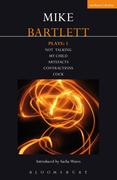
Bartlett Plays: 1
Bartlett Plays: 1 - Not Talking My Child Artefacts Contractions Cock: ab 21.49 €- Shop: ebook.de
- Price: 21.49 EUR excl. shipping
-

Land of Shapes
Land of Shapes - & Contractions: ab 9.99 €- Shop: ebook.de
- Price: 9.99 EUR excl. shipping
-

-
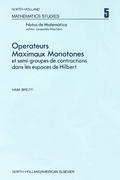
Ope'rateurs maximaux monotones et semi-groupes de contractions dans les espaces de Hilbert
Ope'rateurs maximaux monotones et semi-groupes de contractions dans les espaces de Hilbert: ab 54.99 €- Shop: ebook.de
- Price: 54.99 EUR excl. shipping
-
Portuguese Music for Solo Cello
'In Antagonia, for solo cello, the first and second strings are tuned half a tone lower (A and D flat). This tuning divides the instrument in two contrasting fields: two perfct fifths separated by an augmented fourth that makes them "antagonistic". This antagonism is transposed to every aspect of musical construction: there is one force trying to ascend and another one pushing down (or vice-versa), rhythmical characters opposing each other in expansions and contractions, and dynamic progressions in different directions. The work is divided into six parts: prologue (pesante), four variations (fuido, presto, allegretto, lento) and epilogue. In the introduction there is no theme but a structure that is transformed in tempi, textures and sonorities peculiar to each variation. In the epilogue there is a deformed condensation of all the previous sections: it is the non-resolution of an untransposable conflict. It's anguish is intensified by the dissonances of the scordatura, wich "repress" the natural tone of the cello. Written in Almoçageme in March 1990, it was first performed in Barcelona three months later, in a concert in memory of Jean Etienne Marie. It was recorded by the Czech and the Portuguese Broadcasting Companies, and selected by the jury of the International Society for Contemporary Music for the World Music Days that took place in Mexico City, in November 1993. It is dedicated to the Portuguese cellist Irene Lima.' Alexandre Delgado 'The composition of this piece, like all my music, is based on listening and spectral understanding of the sound phenomena, taking into account the acoustic properties of the musical instrument, which is the subject of research, leading to the abstract speculation on the compositional process. The piece is based on a defective spectrum on C (one octave below the C on the cello), in which only 11 partials (from the fundamental up to the 29th harmonic) are taken into consideration. From this defective spectrum I realized 8 micro-intervallic frequency shifts, resulting in a total of 9 sound aggregates. These aggregates have a slightly different intervallic structure between them, yet this small difference is of great importance - in terms of acoustics and perception it changes considerably the harmonicity / inharmonicity of the aggregates, what actually means being more consonant or less consonant in terms of perception. Each of these sound aggregates corresponds to a section of the piece. Although the sections succeed without interruption, some interludes and transitions are introduced here and there between them. There are also few sections, where some of the material presented earlier is reintroduced from a new perspective. Within each section, every aggregate is the subject of successive transpositions, yet retaining the same intervallic structure and also conforming to the base harmonic spectrum. These transpositions give origin to numerous melodic figurations, often in accelerando and appearing throughout the piece. The electronics operates primarily as a shadow or double of the acoustic instrument, blending with it, and extending it's identity. Occasionally, it can also act as a counterpoint.' Miguel Azguime, 29th July 2014 'Labirintho was written for the cellist Filipe Quaresma. The piece is clearly divided into two major parts recognizable by the change in tempo. The construction of this piece is centred on a theme that is constantly repeated and varied, resembling an obsession from which it can not escape (like in a maze).' Carlos Azevedo 'One of the salient features of the work of Corte-Real has been it's umbilical relationship with Portuguese culture and, above all, with it's poetry. Poets that the composer has put to music or from whom has taken inspiration are already numerous: Pessoa, Pascoaes, Régio, Agostinho da Silva, Eugénio de Andrade or Florbela Espanca. The work Bicicleta do Poeta (The Poet's Bicycle) (2014) for solo cello, is inspired by the poem Bicicleta (Bicycle) by Herberto Hélder. As in the poem, the music is full of sudden changes of speed and pace, unpredictable changes of direction and hard braking. The calm, relaxed, summer's-day ride itself gives way to the speed and vertigo inside...' Afonso Miranda 'Ostinati (2010) represents a change of direction in the composer's work: a turn that incorporates previously rejected elements, guided under a greater freedom, in the sense that it suffers less from the denial of material and solutions than from the meeting of musically sufficient ideas in order to create one sound identity. The material found in the origin of the score is, therefore, quite concise. Like other works from Ricardo Ribeiro, if the thought associated to the electronic processing is present since the first moment, it is true that the instrumental part lives by itself as an autonomous piece. This phenomenon doesn't work both ways: the electronic is only possible as a factor that improves the original idea, sometimes even recreating it, according to the notes which date from the elaboration of the instrumental part. The idea that each performance consists in a unique piece is, in Ostinati, taken a step further, since the electronic program was designed with some characteristics of randomness concerning to the degree of microtonality's range and overlapping of elements closer or furthest in time, which can be triggered in certain sections. The same electronic works as an orchestration of a particella, adding the microtonality and enhancing the timbre. The persistence of ideas and gestures is a metaphor of the idea of repetition, a presence that is increasingly evident in the last works of the composer. The repetition that in Intensités (2001) happened at the harmonic level, is present in Ostinati at a much more immediate level, in the movement, in the heights, in the continuous manifestation of strength which simultaneously transmits serenity.' Diana Ferreira.- Shop: odax
- Price: 26.29 EUR excl. shipping
