Did you mean:
Technokratie50 Results for : technocratic
-

Divided Highways: Building the Interstate Highways, Transforming American Life , Hörbuch, Digital, ungekürzt, 826min
In Divided Highways, Tom Lewis offers an encompassing account of highway development in the United States. In the early twentieth century Congress created the Bureau of Public Roads to improve roads and the lives of rural Americans. The Bureau was the forerunner of the Interstate Highway System of 1956, which promoted a technocratic approach to modern road building sometimes at the expense of individual lives, regional characteristics, and the landscape. With thoughtful analysis and engaging prose Lewis charts the development of the Interstate system, including the demographic and economic pressures that influenced its planning and construction and the disputes that pitted individuals and local communities against engineers and federal administrators. This is a story of America's hopes for its future life and the realities of its present condition. It is an engaging history of the people and policies that profoundly transformed the American landscape - and the daily lives of Americans. In this updated edition of Divided Highways, Lewis brings his story of the Interstate system up to date, concluding with Boston's troubled and yet triumphant Big Dig project, the growing antipathy for big federal infrastructure projects, and the uncertain economics of highway projects both present and future. ungekürzt. Language: English. Narrator: Jim D. Johnston. Audio sample: https://samples.audible.de/bk/acx0/083121/bk_acx0_083121_sample.mp3. Digital audiobook in aax.- Shop: Audible
- Price: 9.95 EUR excl. shipping
-

Decolonial Ecology
The world is in the midst of a storm that has shaped the history of modernity along a double fracture: on the one hand, an environmental fracture driven by a technocratic and capitalist civilization that led to the ongoing devastation of the Earth's ecosystems and its human and non-human communities and, on the other, a colonial fracture instilled by Western colonization and imperialism that resulted in racial slavery and the domination of indigenous peoples and women in particular.In this important new book, Malcom Ferdinand challenges this double fracture, thinking from the Caribbean world. Here, the slave ship reveals the inequalities that continue during the storm: some are shackled inside the hold and even thrown overboard at the first gusts of wind. Drawing on empirical and theoretical work in the Caribbean, Ferdinand conceptualizes a decolonial ecology that holds protecting the environment together with the political struggles against (post)colonial domination, structural racism, and misogynistic practices.Facing the storm, this book is an invitation to build a world-ship where humans and non-humans can live together on a bridge of justice and shape a common world. It will be of great interest to students and scholars in environmental humanities and Latin American and Caribbean studies, as well as anyone interested in ecology, slavery, and (de)colonization.- Shop: buecher
- Price: 24.99 EUR excl. shipping
-

No Requiem for the Space Age: The Apollo Moon Landings and American Culture , Hörbuch, Digital, ungekürzt, 614min
During the summer of 1969 - the summer Americans first walked on the moon - musician and poet Patti Smith recalled strolling down the Coney Island Boardwalk to a refreshment stand, where "pictures of Jesus, President Kennedy, and the astronauts were taped to the wall behind the register." Such was the zeitgeist in the year of the moon. Yet this holy trinity of 1960s America would quickly fall apart. Although Jesus and John F. Kennedy remained iconic, by the time the Apollo Program came to a premature end just three years later few Americans mourned its passing. Why did support for the space program decrease so sharply by the early 1970s? Rooted in profound scientific and technological leaps, rational technocratic management, and an ambitious view of the universe as a realm susceptible to human mastery, the Apollo moon landings were the grandest manifestation of postwar American progress and seemed to prove that the United States could accomplish anything to which it committed its energies and resources. To the great dismay of its many proponents, however, NASA found the ground shifting beneath its feet as a fierce wave of anti-rationalism arose throughout American society, fostering a cultural environment in which growing numbers of Americans began to contest rather than embrace the rationalist values and vision of progress that Apollo embodied. No Requiem for the Space Age offers a narrative of the 1960s and 1970s unlike any told before, with the story of Apollo as the story of America itself in a time of dramatic cultural change. ungekürzt. Language: English. Narrator: Brian Troxell. Audio sample: https://samples.audible.de/bk/adbl/019795/bk_adbl_019795_sample.mp3. Digital audiobook in aax.- Shop: Audible
- Price: 9.95 EUR excl. shipping
-

The Invention of Brownstone Brooklyn: Gentrification and the Search for Authenticity in Postwar New York , Hörbuch, Digital, ungekürzt, 821min
The gentrification of Brooklyn has been one of the most striking developments in recent urban history. Considered one of the city's most notorious industrial slums in the 1940s and 1950s, Brownstone Brooklyn by the 1980s had become a post-industrial landscape of hip bars, yoga studios, and beautifully renovated, wildly expensive townhouses. In The Invention of Brownstone Brooklyn, Suleiman Osman offers a groundbreaking history of this unexpected transformation. Challenging the conventional wisdom that New York City's renaissance started in the 1990s, Osman locates the origins of gentrification in Brooklyn in the cultural upheavals of the 1960s and 1970s. Gentrification began as a grassroots movement led by young and idealistic white college graduates searching for "authenticity" and life outside the burgeoning suburbs. Where postwar city leaders championed slum clearance and modern architecture, "brownstoners" (as they called themselves) fought for a new romantic urban ideal that celebrated historic buildings, industrial lofts and traditional ethnic neighborhoods as a refuge from an increasingly technocratic society. Osman examines the emergence of a "slow-growth" progressive coalition as brownstoners joined with poorer residents to battle city planners and local machine politicians. But as brownstoners migrated into poorer areas, race and class tensions emerged, and by the 1980s, as newspapers parodied yuppies and anti-gentrification activists marched through increasingly expensive neighborhoods, brownstoners debated whether their search for authenticity had been a success or failure. The Invention of Brownstone Brooklyn deftly mixes architectural, cultural and political history in this eye-opening perspective on the post-industrial city. ungekürzt. Language: English. Narrator: Marc Cashman. Audio sample: https://samples.audible.de/bk/adbl/015514/bk_adbl_015514_sample.mp3. Digital audiobook in aax.- Shop: Audible
- Price: 9.95 EUR excl. shipping
-

Democracy and Truth: A Short History , Hörbuch, Digital, ungekürzt, 362min
Fake news, wild conspiracy theories, misleading claims, doctored photos, lies peddled as facts, facts dismissed as lies - citizens of democracies increasingly inhabit a public sphere teeming with competing claims and counterclaims, with no institution or person possessing the authority to settle basic disputes in a definitive way.The problem may be novel in some of its details - including the role of today's political leaders, along with broadcast and digital media, in intensifying the epistemic anarchy - but the challenge of determining truth in a democratic world has a backstory. In this lively and illuminating book, historian Sophia Rosenfeld explores a long-standing and largely unspoken tension at the heart of democracy between the supposed wisdom of the crowd and the need for information to be vetted and evaluated by a learned elite made up of trusted experts.She begins with an examination of the period prior to the 18th century Age of Revolution, where she uncovers the political and epistemological foundations of our democratic world. Subsequent chapters move from the Enlightenment to the rise of both populist and technocratic notions of democracy between the 19th and 20th centuries to the troubling trends - including the collapse of social trust - that have led to the rise of our post-truth public life. Rosenfeld concludes by offering suggestions for how to defend the idea of truth against the forces that would undermine it."It's a tribute to the quality of this pithy, illuminating book that one nonetheless ends it provoked and inspired, rather than dispirited." (The Guardian)"Brilliantly lucid...few historians are better positioned to tell this story than Rosenfeld." (The Nation)"An essential guide to finding the roots of our current predicament." (Lynn Hunt, author of History: Why It Matters) ungekürzt. Language: English. Narrator: Jean Ann Douglass. Audio sample: https://samples.audible.de/bk/acx0/160619/bk_acx0_160619_sample.mp3. Digital audiobook in aax.- Shop: Audible
- Price: 9.95 EUR excl. shipping
-

A Capitalism for the People : Recapturing the Lost Genius of American Prosperity , Hörbuch, Digital, ungekürzt, 680min
Born in Italy, University of Chicago economist Luigi Zingales witnessed firsthand the consequences of high inflation and unemployment - paired with rampant nepotism and cronyism - on a country’s economy. This experience profoundly shaped his professional interests, and in 1988 he arrived in the United States, armed with a political passion and the belief that economists should not merely interpret the world, but should change it for the better. In A Capitalism for the People, Zingales makes a forceful, philosophical, and at times personal argument that the roots of American capitalism are dying, and that the result is a drift toward the more corrupt systems found throughout Europe and much of the rest of the world. American capitalism, according to Zingales, grew in a unique incubator that provided it with a distinct flavor of competitiveness, a meritocratic nature that fostered trust in markets and a faith in mobility. Lately, however, that trust has been eroded by a betrayal of our pro-business elites, whose lobbying has come to dictate the market rather than be subject to it, and this betrayal has taken place with the complicity of our intellectual class. Because of this trend, much of the country is questioning - often with great anger - whether the system that has for so long buoyed their hopes has now betrayed them once and for all. What we are left with is either anti-market pitchfork populism or pro-business technocratic insularity. Neither of these options presents a way to preserve what the author calls the lighthouse” of American capitalism. Zingales argues that the way forward is pro-market populism, a fostering of truly free and open competition for the good of the peoplenot for the good of big business. Drawing on the historical record of American populism at the turn of the twentieth century, Zingales illustrates how our current circumstances aren’t all that different. People in the middle and at the bottom are getting s ungekürzt. Language: English. Narrator: Jonathan Davis. Audio sample: https://samples.audible.de/bk/adbl/004561/bk_adbl_004561_sample.mp3. Digital audiobook in aax.- Shop: Audible
- Price: 9.95 EUR excl. shipping
-

Summary of Homo Deus: Includes Key Takeaways & Analysis , Hörbuch, Digital, ungekürzt, 47min
Please note: This is a summary, analysis and review of the book and not the original book. Yuval Noah Harari's earth-shattering look at the future of humanity, Homo Deus, breaks down the path of humanism and humanity, and offers an often bleak look at what the human race can expect in the future. This FastReads summary offers supplementary material to Homo Deus: A Brief History of Tomorrow to help you distill the key takeaways, review the book's content, and further understand the writing style and overall themes from an editorial perspective. Whether you'd like to deepen your understanding, refresh your memory, or simply decide whether or not this book is for you, FastReads summary is here to help. Absorb everything you need to know in under 30 minutes! What does this FastReads summary include? Executive overview of the original book Key takeaways from each chapter Exposition and analysis of key takeaways Original book summary overview Yuval Noah Harari predicts a technocratic dystopia that some may find harrowing, and others exciting. Skeptics who think a world in which data rules the universe could be anything other than science fiction will be challenged, and potentially persuaded by Harari's arguments. Homo Deus challenges the most fundamental questions of what it means to be human and implores listeners to contemplate and take control of their futures before data does it for them. Before you buy: The purpose of this FastReads summary is to help you decide if it's worth the time, money, and effort listening to the original book (if you haven't already). FastReads has pulled out the essence - but only to help you ascertain the value of the book for yourself. This analysis is meant as a supplement to, and not a replacement for, Homo Deus. ungekürzt. Language: English. Narrator: L.K. Negron. Audio sample: https://samples.audible.de/bk/acx0/098822/bk_acx0_098822_sample.mp3. Digital audiobook in aax.- Shop: Audible
- Price: 9.95 EUR excl. shipping
-

Silver: A Collection of Short Stories , Hörbuch, Digital, ungekürzt, 460min
Black’s Lonesome Path - Black, like a select few other beings, is a soul reaper, whose sole predilection is to claim human souls. However, his life is turned upside down in a chance encounter with a human woman. Black’s memories of his past human life come flooding back to him. Will he continue to hunt human souls or will he turn against the Authority and now hunt the hunters? This is the tale of the beginnings of Black’s journey as a changed reaper.Highway I-28 - This is tale about how guilt acted as a powerful enough force to transport Mark Rose to a world of beauty, mystery and monsters. Trouble is knowing what or who the true monsters are. As light and dark magic tussle for supremacy, wielded by sorceresses, could there be such a thing as grey magic? Was Mark Rose too far gone along Highway I-28 to ever go back home?Dear Diary - This short story unfolds as journal entries. The journal’s author takes you through his grief stricken teenage life, having lost his girlfriend to the afterlife. The lad uncovers something fascinating about the magical book that he’d found in his attic, but what are the consequences to all this newfound power?Deep Sleep - Delve into the unknown, as you too begin to question the nature of reality. The short story tale is an emotional roller coaster ride, with poignant, yet subtle inferences to notions of technocratic neo-feudal-like societies. Scottie is made to question everything he’s ever known, as he finds that his known reality literally fades into inexistence. What happens to Kathryn?Shells and Shadows - In this modern day fantasy short story, Shojosh paints a world of seers, sprinters, and normals, humans with different or no abilities, who live alongside a world of bountiful creatures, on several of earth’s dimensions. Beneath the façade of your typical coming of age story is an atypical coming together of several mystical forces. Lana and her fa ungekürzt. Language: English. Narrator: Dannie Harris. Audio sample: https://samples.audible.de/bk/acx0/204912/bk_acx0_204912_sample.mp3. Digital audiobook in aax.- Shop: Audible
- Price: 9.95 EUR excl. shipping
-

WTF?: What have we done? Why did it happen? How do we take back control? , Hörbuch, Digital, ungekürzt, 483min
There has been a people's revolt against the way the West has been run. Brexit, Trump, the recent British and French elections saw millions of people shouting that they were sick to death of things never getting better. In WTF Robert Peston gives us his highly personal account of what those who have ruled us for years got so badly wrong and what we need to do to mend the terrible fractures in our society. Peston wrote WTF because the election of Trump, the Corbyn surge and the vote for Brexit all challenged how he thought the world could and should be run. With characteristic passion and clarity, he looks at how and whether it is possible to make a success of leaving the EU, what the lessons should be of the appalling Grenfell Tower tragedy, whether robots can be stopped from taking our work, what can be done to staunch the widening gap between rich and poor, how to raise living standards for all and what must happen to prevent democracy being subverted by technocratic geniuses with the ability to manipulate social media. These are the challenges of our age, because the combination of economic stagnation and a technological revolution is killing jobs, enriching the few and undermining the institutions we used to trust as the foundations of the state. What and whom can we believe when it is almost impossible to know whether posts on Facebook and Twitter are hard news or the fabrication of a Russian agent? As in his best sellers, Who Runs Britain? and How Do We Fix This Mess?, Robert Peston draws on his years of experience as a political, economics and business journalist to show us what has gone bad and gives us a manifesto to put at least some of it right. WTF is a trenchant, often entertaining account of the recent past. It is also a call to action, giving hope to all of us who believe that taking back control is not only vital but possible. ungekürzt. Language: English. Narrator: Robert Peston, Luke Thompson. Audio sample: https://samples.audible.de/bk/hodd/001301/bk_hodd_001301_sample.mp3. Digital audiobook in aax.- Shop: Audible
- Price: 9.95 EUR excl. shipping
-
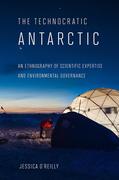
The Technocratic Antarctic
The Technocratic Antarctic - An Ethnography of Scientific Expertise and Environmental Governance: ab 20.99 €- Shop: ebook.de
- Price: 20.99 EUR excl. shipping