38 Results for : excommunication
-

The Year of Living Biblically: One Man's Humble Quest to Follow the Bible as Literally as Possible, Hörbuch, Digital, 375min
After his hilarious chronicle about reading the Encyclopedia Britannica from A to Z (actually a-ak to zyweic), our fearless author, A. J. Jacobs, tackles a new intellectual adventure, an exploration of the most influential book in the world: the Bible. He determined the best way to explore the Bible was to live it, as literally as possible. For one year. There are 700 rules in the Old and New Testaments, A. J. discovered - some wise, some general, some contradictory. Some from Jesus, some from prophets, some from God. A. J. assembled a board of spiritual advisors: rabbis, ministers, and priests, some conservative, some of them "one four-letter word away from excommunication", who would provide guidance and advice throughout his journey. But the journey was, by necessity, arbitrary. DIY religion. In The Year of Living Biblically, A. J. explores the Bible chronologically, from the Old Testament (crucial, given the 10 Commandments) to the New Testament (crucial, given America's powerful evangelical movement and its literal interpretation of the Bible) and lives the Bible on every level. He obeys the 10 Commandments, he is fruitful and multiplies (A. J.'s wife had twins during his year!); he remembers the Sabbath and keeps it holy. But he also obeys the oft-neglected rules, such as avoiding clothes of mixed fibers and refraining from shaving the edges of his beard (Leviticus 19:27). So, throughout the year, A. J. is commonly mistaken for a member of ZZ Top. Or Moses. This is a look at religion today through one man's totally arbitrary, deeply funny, journey. In A. J.'s hands, The Year of Living Biblically is also fascinating and irresistible. Language: English. Narrator: A. J. Jacobs. Audio sample: https://samples.audible.de/bk/sans/001002/bk_sans_001002_sample.mp3. Digital audiobook in aax.- Shop: Audible
- Price: 9.95 EUR excl. shipping
-

The Making of Martin Luther , Hörbuch, Digital, ungekürzt, 588min
A major new account of the most intensely creative years of Luther's career The Making of Martin Luther takes a provocative look at the intellectual emergence of one of the most original and influential minds of the 16th century. Richard Rex traces how, in a concentrated burst of creative energy in the few years surrounding his excommunication by Pope Leo X in 1521, this lecturer at an obscure German university developed a startling new interpretation of the Christian faith that brought to an end the dominance of the Catholic Church in Europe. Luther's personal psychology and cultural context played their parts in the whirlwind of change he unleashed. But for the man himself, it was always about the ideas, the truth, and the Gospel. Focusing on the most intensely important years of Luther's career, Rex teases out the threads of his often paradoxical and counterintuitive ideas from the tangled thickets of his writings, explaining their significance, their interconnections, and the astonishing appeal they so rapidly developed. Yet Rex also sets these ideas firmly in the context of Luther's personal life, the cultural landscape that shaped him, and the traditions of medieval Catholic thought from which his ideas burst forth. Lucidly argued and elegantly written, The Making of Martin Luther is a splendid work of intellectual history that renders Luther's earthshaking yet sometimes challenging ideas accessible to a new generation of listeners. Author bio: Richard Rex is professor of Reformation history at the University of Cambridge and a fellow of Queens' College. His books include Tudors: The Illustrated History and Henry VIII and the English Reformation. He lives in Cambridge, England. ungekürzt. Language: English. Narrator: John Curless. Audio sample: https://samples.audible.de/bk/reco/010465/bk_reco_010465_sample.mp3. Digital audiobook in aax.- Shop: Audible
- Price: 9.95 EUR excl. shipping
-

Always Leave an Airman Behind: A Real Story of Surviving the Crab Leadership Culture , Hörbuch, Digital, ungekürzt, 596min
Always Leave an Airman Behind: A Real Story of Surviving the Air Force Crab Leadership Culture is a story about one airman's journey from being poor and homeless to becoming an international top performer.The story details the journey of this airman as he climbs the ranks and discovers the leadership lapses that are prevalent in the service that created a toxic culture of retribution, bullying, and pettiness that is a contributing factor to the growing military and veteran suicide epidemic.The author was a poor recruit from a family that was devastated by drug abuse and was saved by joining the military and he went on to achieve high levels of success in the service. His journey details the "crab leadership" he faced at every assignment and how the average leaders in units across the service. The story follows the evolution of this young recruit into a seasoned leader that made a positive impact on tens of thousands of airmen across the world and his eventual excommunication from the service due to bullying from high ranking members in his unit.The author integrates the leadership lessons he used to become an international award winner to including leadership lessons required by the Air Force for promotion to the highest ranks in the enlisted tier. He weaves the Air Force core values into each story he tells to explain how each leader that influenced him compared to the Air Force standard of leadership.This audiobook is for any supervisor or leader who wants to look at life from the perspective of an overachiever and gives insights on the thoughts a high performing individual maintains about situational leadership. It is also a valuable listen for anyone who is struggling with the perils of poverty and looking to change their personal mindset to overcome the challenges and barriers to success that being poor creates. ungekürzt. Language: English. Narrator: Ellis Franks. Audio sample: https://samples.audible.de/bk/acx0/209288/bk_acx0_209288_sample.mp3. Digital audiobook in aax.- Shop: Audible
- Price: 9.95 EUR excl. shipping
-

How I Escaped Political Correctness and You Can Too , Hörbuch, Digital, ungekürzt, 292min
You care about the greater good, but you want to define it for yourself. What if you disagree with the politically correct view?You fear ridicule, shunning and attack, so you tell yourself it’s not worth it and find a way to conform. Until one day you can’t.I was politically correct until the day I heard myself lie about a simple fact because the truth didn’t sound progressive. I froze - in the middle of a lecture to 150 students. Enough! I decided to take back my brain. I gave myself permission to see what I see and know what I know instead of living in fear. It cost me, but the benefits outweighed the costs. Here is the story of my transition. You can do it, too.This book shows you how:Biology drives political correctnessYou can enjoy the rewards of political correctness without itYou can feel good when conformity surrounds youWhat do I mean by political correctness?I do not mean the hot-button dramas that fill the headlines. They are just tribal solidarity rituals. I mean the belief that we are suffering under a “bad system”. Political correctness trains you to feel victimized by bad guys running the bad system, and to fight them by following the leaders of political correctness. If you follow, you get to be one of the good guys and share in the rewards that these leaders control. If you don’t follow, you are labelled a bad guy and excommunicated.This message is so pervasive that we take it for granted. I only questioned it after decades of noticing a gap between the facts of my life and the politically correct dogma. I saw that the good guys are not all good and the bad guys are not all bad. I tried to overlook the inconvenient facts because I feared excommunication. But when I had kids, I saw how harmful it is for children to be taught that they’re powerless victims. I did not want my kids to blame their frustrations on bad guys and “the system”. I wanted them to believe in themsel ungekürzt. Language: English. Narrator: Loretta Breuning. Audio sample: https://samples.audible.de/bk/acx0/179955/bk_acx0_179955_sample.mp3. Digital audiobook in aax.- Shop: Audible
- Price: 9.95 EUR excl. shipping
-

The Swabian League: The History and Legacy of the Mutual Defense Pact for the Holy Roman Empire’s Imperial Estates , Hörbuch, Digital, ungekürzt, 85min
Despite the pope’s aversion to temporal glory, his authority tended to fill the vacuum in the West left when the last Western Roman emperor, Romulus Augustus, was deposed in 476. The pope would continue to do so until 800, when Charlemagne would allow himself to be crowned Emperor of the West in Rome upon receiving his crown from Pope Leo III. This created modern Europe and was the culmination of two centuries of papal policy aimed at securing its independence from the Byzantine Empire in Constantinople. Before Charlemagne’s coronation, there had been no formal break with Constantinople, but recognizing Charlemagne aimed to ensure the Roman Empire was reborn in the West. For the papacy, the new empire, now commonly referred to as the Holy Roman Empire, secured its independence from Constantinople since the new emperor had received his crown from the Church. The popes maintained and would continue to maintain for centuries that the imperial power lay in their hands as the heirs and custodians of ancient Rome, and that they had delegated that power to the King of the Franks. The papacy would guard this doctrine jealously, and for centuries it held that no man could call himself emperor until the pope had placed the Crown of Charlemagne upon his head. Naturally, many Holy Roman emperors disputed the pope’s interpretation of their authority, and the battles between popes and emperors shaped European history for much of the Middle Ages. Pope Gregory VII (r. 1073-1085) famously declared that the pope had no earthly judge and that he might depose emperors and absolve their subjects from the oaths of allegiance. He demonstrated this power by forcing Emperor Henry IV, in penitential garb, to wait upon him in the snow outside the walls of Canossa, and after three days the pope deigned to absolve him from excommunication. For a time, the popes were masters of Europe, but in the end their power was eroded by the growing tide of nationalism, religious indifferen ungekürzt. Language: English. Narrator: Stephen Platt. Audio sample: https://samples.audible.de/bk/acx0/212203/bk_acx0_212203_sample.mp3. Digital audiobook in aax.- Shop: Audible
- Price: 9.95 EUR excl. shipping
-
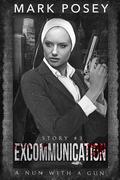
Excommunication (A Nun With A Gun #3)
Excommunication (A Nun With A Gun #3): ab 2.99 €- Shop: ebook.de
- Price: 2.99 EUR excl. shipping
-
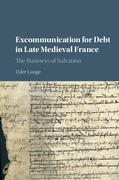
Excommunication for Debt in Late Medieval France
Excommunication for Debt in Late Medieval France - The Business of Salvation: ab 24.99 €- Shop: ebook.de
- Price: 24.99 EUR excl. shipping
-
Selections from the Recueil By Francesco Pasquale
A Berkeley piano teacher would recommend for her students: No. 58 Allegro, No. 71 'reminds me of Scarlatti', No. 72 'very pretty with a cadenza and No. 73, 'very dramatic'. CD Baby customers can also check out the mysterious No. 54 Maestoso and the very tender No. 47 Amoroso, and No. 49 Pastorale with the surprise middle part. Web-site: fpricci.com In November of 1778, F. P. Ricci placed an announcement in a Hague newspaper that his 'Recueil' would be available for 'seven Dutch nickels at the beginning of 1779.' (1) Many music historians consider this 100 piece work to be the first piano-forte method. In the introduction, Ricci writes: 'The same zeal that drives your efforts to guide your students has compelled me to follow with my own, the order that you will find in this 'Recueil de Connaissances Elementaires pour le Forte-piano'. The success that this work has always brought me has led me to publish it, and I dare to hope that it will meet with your approval.' Ricci was born In the beautiful town of Como, Italy at the foot of the Swiss Alps in 1732. After he finished his musical education, he was ordained a priest, and subsequently he was appointed Maestro di Cappella at the Cathedral of Como. His church superiors granted Ricci autonomy, allowing him to seek his fortune abroad. He lived a long and fruitful life of 85 years as a touring musician, composer, musical entrepreneur and well loved music teacher. The music on this CD is from the 'Recueil' and he probably wrote the pieces for his students. Recently with the aid of the Italian musicologist Oscar Tajetti, 200 letters written to Ricci have come to light. In her biography of him based on these letters, 'Mon Cher Ami', Helen Metzelaar describes how two of his students in Milan, Marianne and Julie Imbonate wrote to Ricci: 'We wait impatiently for your arrival...for the pleasure of playing the Musette together'. Another letter from the Como Archive is from La Salazar de Los Porta who writes: 'I am flattered that you will have the graciousness to write some easy music pieces for my limited ability and I wish with all my heart to play something really by you'. (2) Did some of these 'easy pieces' later find their way into the 'Recueil'? Did the 'Musette' become 'No 82'? Ricci very likely accompanied his students on the violin. In about 1764, Ricci journeyed across the Alps into the countries of Northern Europe, with his touring partner and friend, the famous cellist, Francesco Zappa. Soon he made his home in Holland where he would remain for the next sixteen years. He was a well known a musician in the Hague, often performing as a violinist and singer for the House of Orange. He started to publish his music. Works with and without opus numbers emerged. His sacred composition, 'Dies Irae, Opus 7' was published in 1773. The 'Recueil de Connaissances Elementaires pour le Forte-piano ' has no opus number, but it is the first, #45', in a long list of his compositions at the Dutch music library, '1183 Huis Amerongen Muziekbibliotheek'. When he wasn't on tour, Ricci gathered around himself a large group of students who revered him. He was a very successful teacher. His student Josina van Boetzelaer became one of only two Dutch women composers of the Eighteenth century who's music survives today.(3) Ricci behaved like a kindly uncle to his students. They would often ask him to write pieces for them and in addition, they requested non-musical items such as books. One letter from the Como Archive is from a former student who needed 70 ducats immediately, that very day. Josina requested woolen socks in order to help a friend's husband who had gout. In another letter, she asked Ricci to pack her hair creme carefully because half the last bottle spilled en route.(4) During his time in Holland, Ricci joined the Masonic order. This is surprising, because he was an ordained priest and there had been papal bulls threatening Catholics with excommunication if they were Masons. By 1778, he achieved the level of Fouth Degree Mason in 'Le Veritable Zele' lodge of the Hague. His certificate was signed by Josina's husband and fellow member, Charles baron De Boetzelaer, who mentioned Ricci's 'excellent personal qualities and distinguished talents'.(5) Just when it seem as though he was a fully participating citizen in the Dutch Republic, authorities at the Cathedral of Como summoned Ricci back to his post as 'Maestro di Cappella' They told him that if he did not return, he would lose his position there. Ricci was fourty eight at the time. He returned a celebity, playing organ and directing the choir at the Como Cathedral, and at other churches nearby. (5) His Dutch friends missed Ricci. They continued to write to him five years after he had left. In one of her last letters to her music master, Josina wrote: 'As for us, we will never get used to your absence'(6)) For more information there is a new web-site: fpricci.com FOOTNOTES: 1.Helen Metzelaar, 'Mon cher ami' A New Source on Francesco Pasquale Ricci (1732-1817), his Music Career, and his Dutch Pupils.' Publisher: Tildschrift van de Koninklijke Vereniging voor Nederlandse Muziek geschiedenis LX (2010), p. 116, footnote 91. 2.Ibid., P. 92. 3. Helen Metzelaar, 'From Private to Public Spheres: Exploring womens Role in Dutch Musical Life from c. 1700 to c.1800 and Three Case Studies', Publisher: Koninklijke Vereniging voor Nederlandse Muziek geschiedenis, 1999, p. 128. 4. H. Metzelaar, 'Mon cher ami', p.105, 106,& 97. 5. Malcom Davies, 'The Masonic Muse'. Publisher: Koninklijke Vereniging voor Nederlandse Muziek geschiedenis, 2005, p. 263. 6.Oscar Tajetti, 'Francesco Pasquale Ricci and Como, a European city.' Meeting and concert on Saturday, April 19, 2008, Paolo Giovio Archeological Museum. 7. H. Metzelaar, 'Mon cher ami', p. 106.- Shop: odax
- Price: 20.46 EUR excl. shipping
